2026 Portfolio Showcase
From corporate websites to e-commerce platforms, and from restaurant brands to manufacturing websites, every project goes through full discovery, information architecture planning, and visual design. The four client websites below span different industries and design directions, showing how Yance executes custom web projects in the real world.
Most agencies showcase small adjustments made on top of templates. Yance starts every project from a blank canvas and builds a custom web design strategy around the industry's needs and the target audience. These four featured projects span entertainment, e-commerce, food, and manufacturing, showing how design thinking shifts by use case.
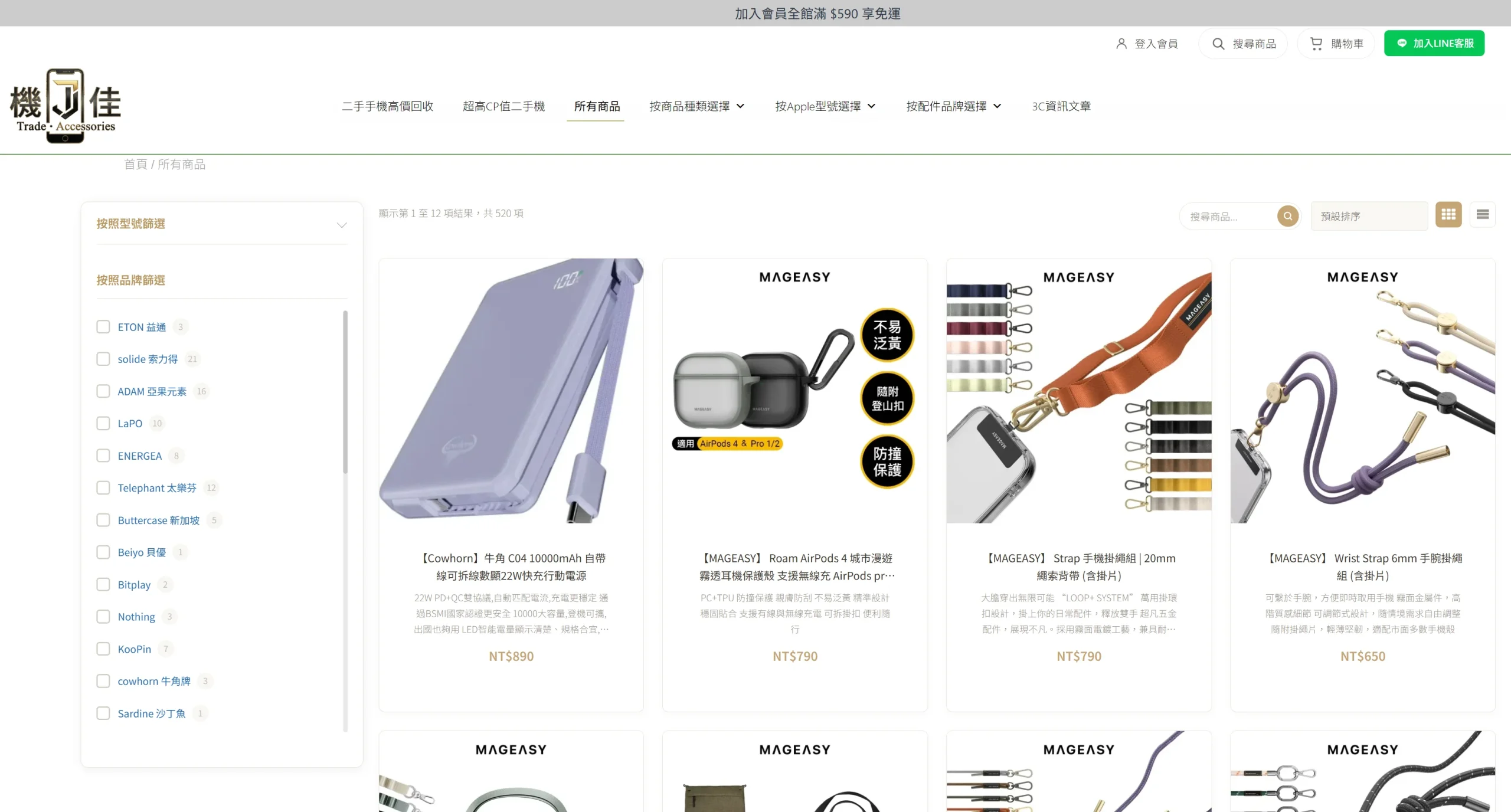
JJPhone specializes in used iPhone buyback and accessory sales, with a core promise of completing on-site purchase service in as little as 15 minutes. The old website had messy product categories, and more than 60% of visitors left before they could find the quote feature. Yance redesigned the experience using e-commerce best practices, placing the instant quote tool in the most prominent spot on the homepage so users could get a reference price in three steps. The product category structure was also rebuilt around SEO strategy, with unique meta tags and Schema markup for each category page.
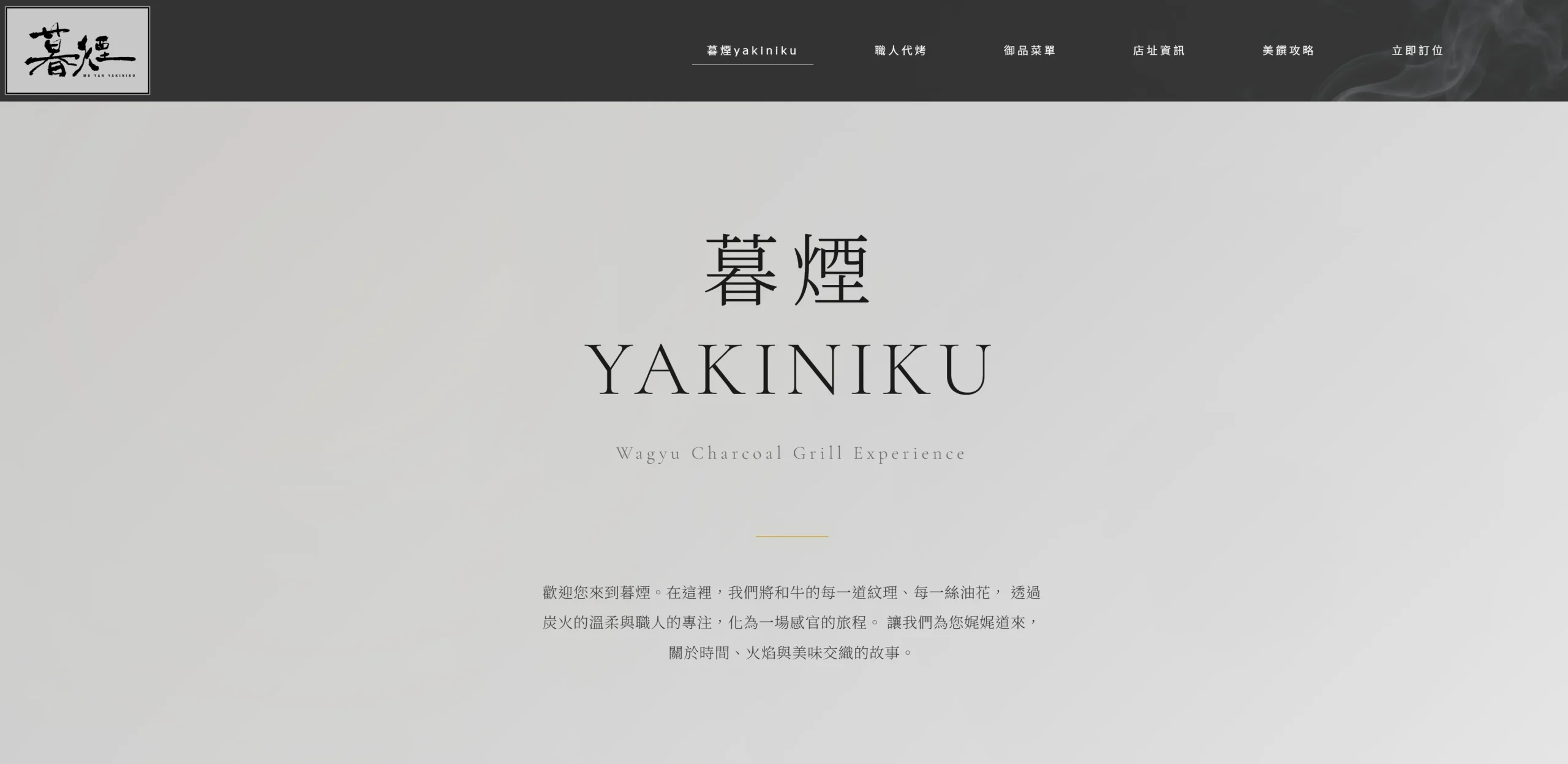
Located in Taipei's Zhongshan District, Muyan focuses on Japanese A5 wagyu and Australian wagyu with table-side grilling service. The original website used a generic template with messy colors and no premium feel, and the mobile menu required side-scrolling just to find the booking entry. Yance redefined the brand color system around a deep black base with warm amber highlights to echo the charcoal-fire atmosphere. The entire site was rebuilt as a responsive web design experience so mobile users could smoothly browse the full menu and complete online reservations.
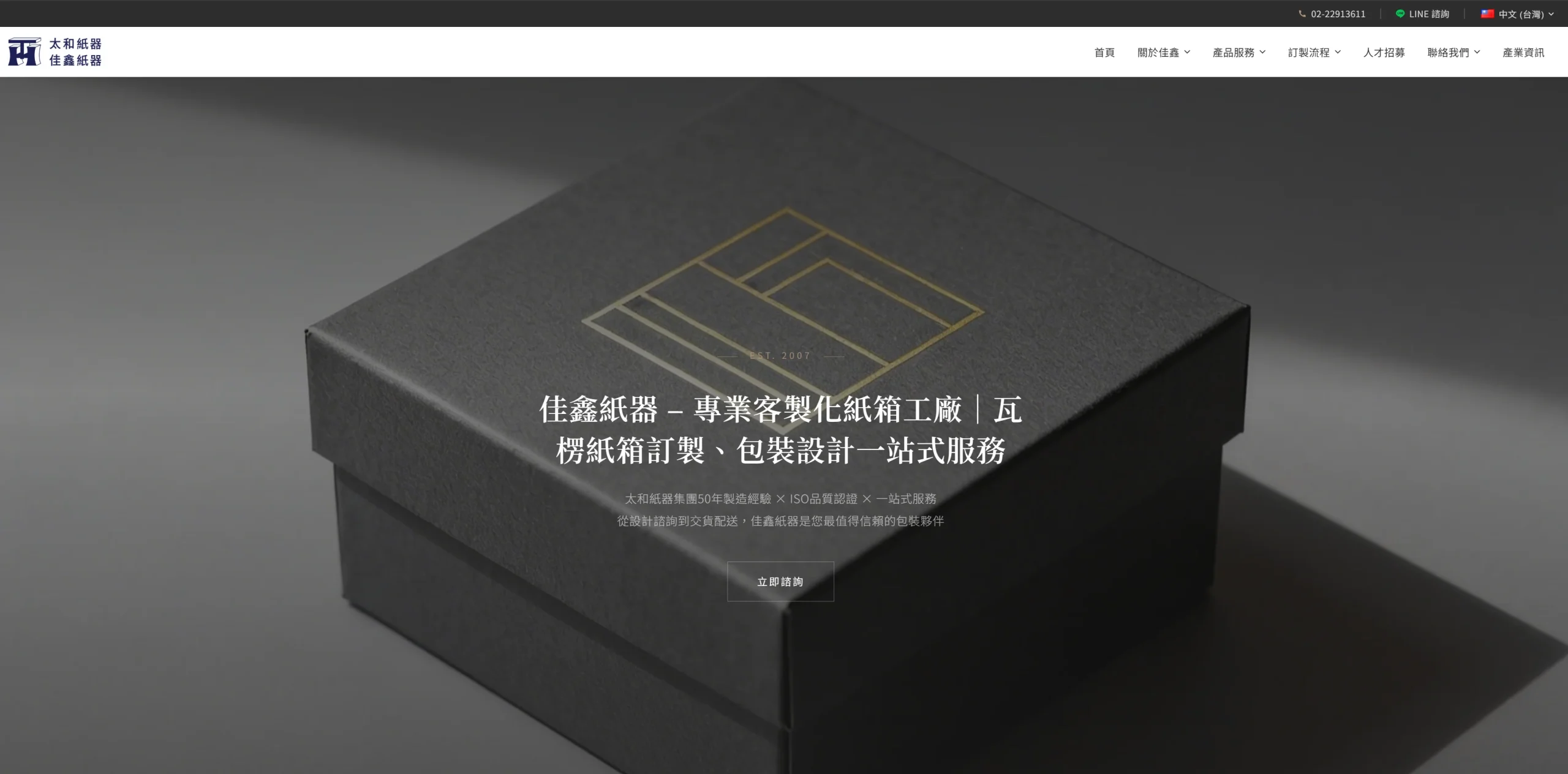
Jiaxin Packaging is a custom carton manufacturer under the Taihe Packaging Group, ISO 9001 certified and operating for more than 30 years. Its old website consisted of static Chinese-only pages and could not support growing overseas inquiry demand. Yance rebuilt the site using corporate website best practices, creating a full product catalog, specification lookup system, and online inquiry form, while also introducing a bilingual Chinese-English structure so overseas buyers could browse specs and submit inquiries directly online. After launch, overseas inquiry volume increased significantly, with customers already reaching from Japan and Southeast Asia.
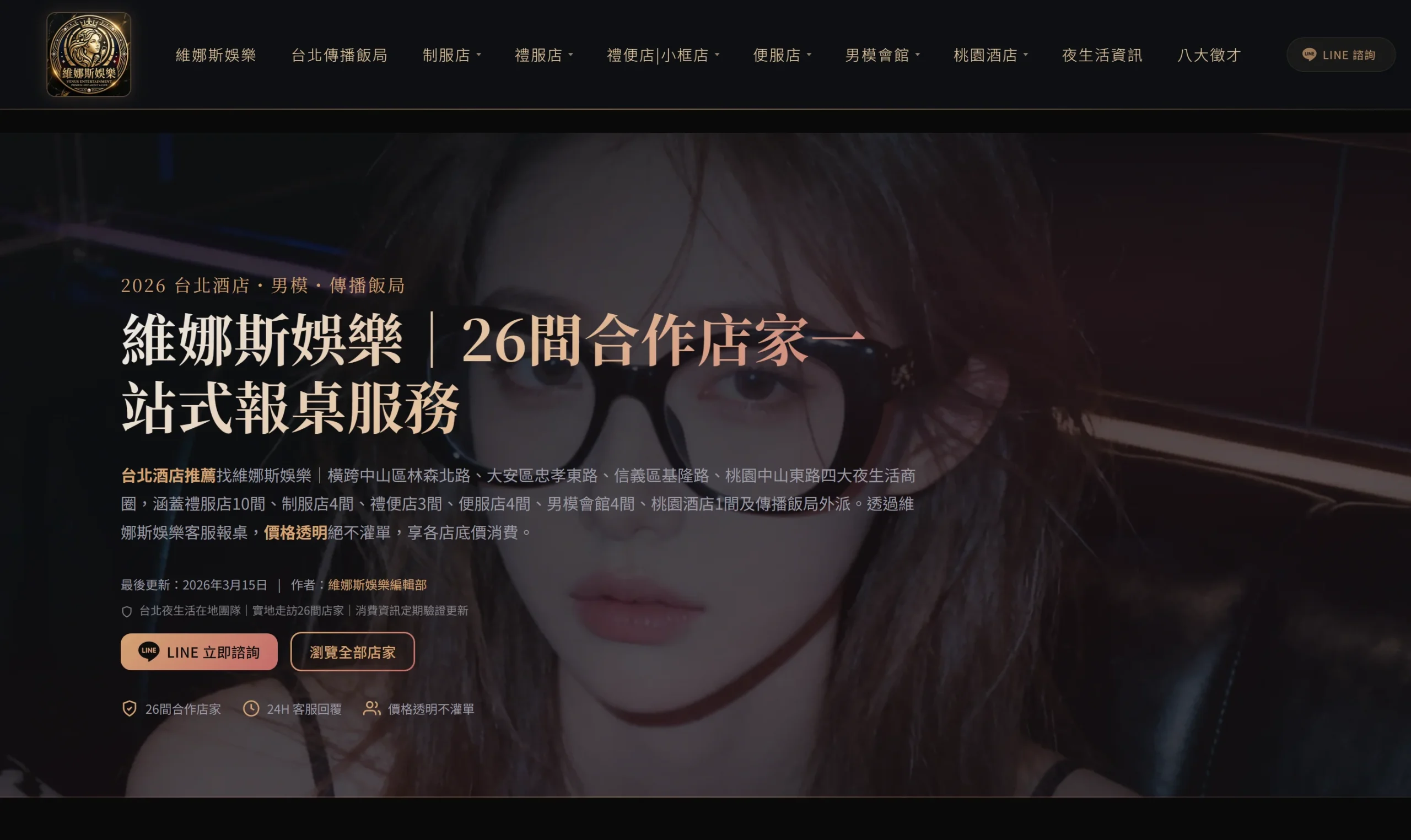
Venus Entertainment is one of Taipei's largest nightlife reservation platforms, with partner venues spanning Linsen North Road, Zhongshan District, and Xinyi District. The old website had scattered information and no real online booking flow, making it difficult for visitors to choose a venue quickly. Yance rebuilt the information architecture from scratch and used a dark luxury visual style with gold accents to create a custom website aligned with the brand image. The site now integrates information for 26 partner venues, live private-room inquiry, and LINE reservation support.
Explore more design possibilities, or review plans and pricing to understand budget options.
Every successful web design project is built on a disciplined design mindset. Yance follows six key principles to ensure each website supports both business goals and user experience.
We do not make design decisions without purpose. Every button position, copy choice, and color decision must answer one question: what business goal does this help the client achieve? That may mean lowering bounce rate or increasing conversions.
We plan the wireframes before opening Figma. Before visual design begins, we spend time mapping page hierarchy, navigation logic, and content priority so users can reach target information within three clicks.
More than 70% of website traffic in Taiwan comes from mobile devices, and Google already uses Mobile-First Indexing. That is why our design workflow starts from the mobile version before expanding to tablet and desktop layouts.
Every additional second of load time can reduce conversions. Yance closely tracks the three Core Web Vitals metrics—LCP, INP, and CLS—to make sure loading speed, interaction response, and visual stability all meet strong standards.
SEO is not something patched in after launch. It starts with the first line of code. Semantic HTML5, Schema structured data, Open Graph sharing tags, and XML sitemaps are all planned during development.
We follow WCAG 2.1 AA standards by maintaining strong color contrast, supporting keyboard interaction, and providing precise alt text for images. Good design should be usable by everyone.
When a brand is already established offline, the next step is making sure the online experience matches that level. The two case studies below track the design journey from requirements to results.
JJPhone runs a business focused on used iPhone buyback and mobile accessories, with a key value proposition built around ultra-fast on-site purchase service. However, the old website had confusing product categories, and users often had to click through five or six pages just to find pricing information. More than 60% left before reaching the quote function.
The redesign made the instant quote tool the centerpiece of the homepage. Users can select model, storage, and condition to receive a reference quote in three simple steps. The product category structure was also rebuilt according to SEO strategy, with unique meta tags and structured data added to each category page.
After launch, the page bounce rate dropped by 28%, online inquiry form submissions nearly doubled, and rankings for keywords such as "iPhone buyback" and "phone recycling" rose steadily.
Muyan is located in Taipei's Zhongshan District and specializes in Japanese A5 wagyu and Australian wagyu with professional table-side grilling service. Its original website used a generic template with inconsistent colors and little sense of luxury, and mobile visitors had to scroll sideways through the menu just to find the reservation entry.
Yance redefined the brand color system with a deep black base and warm amber highlights to evoke the atmosphere of charcoal fire. The full site was rebuilt as a responsive design experience so users could browse the full menu and complete reservations smoothly on mobile. Following our design process, the entire project moved from initial discovery to launch in just eighteen working days.
Three months after launch, Google search impressions increased by 42%, the share of online bookings rose from under 10% to 35%, and mobile LCP stayed under 1.8 seconds—well above the typical standard in the restaurant industry.
All four projects share one technical principle: every website passes the "good" threshold for Core Web Vitals, with each metric—from LCP loading speed to CLS visual stability—measured and tuned in detail.
These metrics are not just launch-day snapshots. They serve as ongoing quality benchmarks. Every delivered project includes a performance report and optimization guidance so results do not fade over time.
Architecturally, every website follows a mobile-first design approach aligned with Google Mobile-First Indexing, helping the site maintain stronger visibility in mobile search.
One design system cannot fit every industry. Restaurants need premium food photography and online booking, while manufacturers need robust product catalogs and specification filtering. Yance builds a tailored strategy for each vertical.
A website for the entertainment industry is not just an information tool. It is an extension of the brand experience. Visitors should feel the venue's atmosphere—lighting, music, and space—the moment they land on the site. We use immersive visual design, dark palettes, and motion effects to recreate the physical experience in digital form.
The main challenge is turning complex information—multiple venues, private rooms, and time slots—into an intuitive browsing path so visitors can choose a location and enter the booking flow within 30 seconds.
E-commerce websites revolve around one core metric: conversion rate. Every extra step, every additional second of load time, and every unclear CTA quietly reduces revenue. We design the shortest possible path from homepage browsing to final checkout based on the customer journey.
Structured data helps products display price and review stars directly in Google results, while SEO-optimized category pages attract high-intent visitors from search engines.
A restaurant website has only a few seconds to make an impression. If visitors do not think "I want to eat there" almost immediately, a potential customer is already lost. Premium food photography, intuitive menu browsing, and one-click booking are all essential.
From an SEO perspective, we plan long-tail keywords around combinations like location plus cuisine type, such as "Zhongshan yakiniku" or "Taipei wagyu restaurant." Combined with LocalBusiness structured data, this helps restaurants get discovered in both map search and voice search.
Many manufacturers in Taiwan face the same issue: strong product quality paired with a website that feels ten years behind. Distributors cannot find complete specifications, overseas buyers cannot access English content, and Google cannot surface the factory clearly. Digital transformation often starts with a professional corporate website.
We build manufacturing websites around a product-first structure, clearly presenting material specifications, dimensions, certifications, and application examples so sales teams gain a much stronger online catalog tool.
Before booking an appointment, patients usually search for doctor credentials, treatment items, and clinic reviews. If a clinic website still looks like a one-page introduction, it effectively sends potential patients to competitors. Medical website design must communicate both professionalism and approachability so trust forms during the browsing process.
We plan clear specialty categorization, doctor introductions, and online booking flows for clinics, paired with MedicalBusiness Schema so Google can surface clinic hours, address details, and reviews directly in search results.
Tutoring centers, language schools, and online learning platforms all face the same challenge: parents and students need a lot of information before they register—teacher background, course content, schedules, and reviews. A poorly structured website loses enrollments directly.
We design education websites around a course-first information architecture, clearly presenting the target audience, syllabus, and expected results for each program. Combined with Course Schema, this helps Google display course information and ratings more effectively.
Real estate decisions involve long cycles and high transaction values, so buyers spend significant time comparing options online before visiting in person. If a property website only offers a few renderings and a phone number, it already trails competitors that provide 3D tours, downloadable floor plans, and live consultations.
We build real estate and brokerage websites around property presentation, combining premium photography, interactive floor plans, and advanced filtering tools so potential buyers can complete an initial comparison directly on the site.
When people look for legal help, the first thing they want to know is whether a lawyer truly understands their issue. A law firm's website is not just a business card. It is a platform for building authority through expertise. Systematic legal articles and case analysis help potential clients find your firm while searching for legal answers.
We design law firm websites around practice areas, with dedicated lawyer profile pages and content structures enhanced by LegalService Schema and FAQ markup to improve visibility in search results.
In the beauty and hair industry, customers are choosing not only a service but also a stylist. A strong salon website must give every stylist a place to showcase work while also offering a smooth online booking experience that reduces the back-and-forth of phone confirmation.
We design beauty websites around portfolio presentation, combining stylist profile pages, service pricing, and live booking tools. Strong visuals replace vague descriptions and help new customers build confidence before they book.
A beautiful website is not automatically a useful one. Every Yance project is held to both visual and technical standards. These are the technical benchmarks we insist on across all work.
LCP under 2.5 seconds, INP under 200 milliseconds, and CLS under 0.1. All three of Google's core page experience metrics reach the "good" level, directly supporting search performance.
We use semantic tags such as header, nav, main, section, and article so search engines can understand the meaning and hierarchy of every page block more accurately.
We configure Schema types such as Organization, LocalBusiness, Product, and FAQPage based on industry needs, helping Google display rich results and rating details more effectively.
We standardize on WebP and AVIF, combine them with lazy loading and responsive srcset images, and typically reduce image weight by more than 35% compared with JPEG.
Before launch, all technical metrics are verified through both PageSpeed Insights and the Rich Results Test, and each delivery includes a full technical report. To learn more about how SEO affects business growth, see The Importance of SEO.
What is the client experience like after launch? These four testimonials from different industries offer the clearest validation of design quality.
From project discovery to launch in under three weeks, Muyan's website captured our premium brand position perfectly. The dark visual style and real wagyu photography keep customers engaged on the site before they ever visit in person.
The new instant quote feature lets customers check device buyback prices online right away. Our in-store close rate improved noticeably, and our team no longer has to spend time giving one-by-one phone estimates.
After more than thirty years in business, Jiaxin finally has a corporate website that truly represents the brand. The product catalog lookup has made distributor ordering far more efficient, and the website structure is dramatically clearer than before.
Information for our 20-plus partner venues used to be scattered everywhere. Yance turned it into one integrated system, so customers can choose a venue and book directly on the site. Online inquiries increased by 30% in the first month after launch.
Ready to make your brand the next success story? Get in touch and let us discuss a website design solution built around your goals.
Pricing depends on functional complexity and total page count. Entry-level projects start from NT$25,000 and include responsive design, basic SEO, and launch guidance. For exact pricing, review the plans and pricing page or book a free consultation for a custom quote.
Most projects are completed within 14 to 21 working days, covering discovery, visual design, front-end development, testing, and launch. More complex e-commerce projects may extend to around 30 days, and the actual schedule is clarified during consultation.
Everything is custom-built. Every project starts from a blank canvas and is planned around the client's industry, brand tone, and audience. This ensures the final website fully matches business needs across visual design, functionality, and SEO architecture.
Yes. Every project includes a basic SEO foundation such as semantic HTML structure, meta tag setup, Schema markup, image compression, and alt text. If you need more advanced keyword strategy or content planning, an SEO expansion package can be added.
A 14-day technical warranty is included after delivery, and any technical bugs found during that period are fixed free of charge. After the warranty period, content updates or feature additions are quoted separately, with written estimates provided before work begins.
Yes. A single-page website works well for campaign promotion, product launches, or market testing. It can include responsive design, form integration, and basic SEO, and it is usually ready to launch within seven working days. If needed later, it can expand smoothly into a full corporate website.
Start Your Journey
From discovery to launch, Yance works with you through the entire process. Whether you need a brand-new website or a redesign of an existing one, we are ready to talk.